Introduction
VuiAdmin is a free, MIT licensed admin dashboard template for React, Next.js, Vue, Angular, HTML and Laravel. Nineteen screens on one design system.
VuiAdmin is a free and open-source admin dashboard template. Nineteen finished screens on one design system, shipped for six stacks, MIT licensed. There is no account, no key, no trial and no "pro version required to remove the watermark".
It is the kind of theme that normally gets sold. Building a dashboard shell, a data table with search and row actions, a themed chart set, a calendar, a full set of form controls and an authentication flow is two or three weeks of work before you have written any of your own product. Cloning this is an afternoon, and what you get is the finished version rather than a starting point you still have to design.
Pick your edition
Every edition renders the same nineteen screens from the same fixtures, because they all read one design system. Pick the one that matches your stack.
| Edition | Stack | Live demo | Source |
|---|---|---|---|
| React | React | react.viliha.com | GitHub |
| Next.js | Next.js | nextjs.viliha.com | GitHub |
| Vue | Vue | vuejs.viliha.com | GitHub |
| Angular | Angular | angularjs.viliha.com | GitHub |
| HTML | HTML | html.viliha.com | GitHub |
| Laravel | Laravel | laravel.viliha.com | GitHub |
Not sure which?
If you are starting something new and have no strong preference, take the React edition. It has the fewest moving parts, and the markup is identical to the others, so moving later is a copy rather than a rewrite.
What is in the nineteen screens
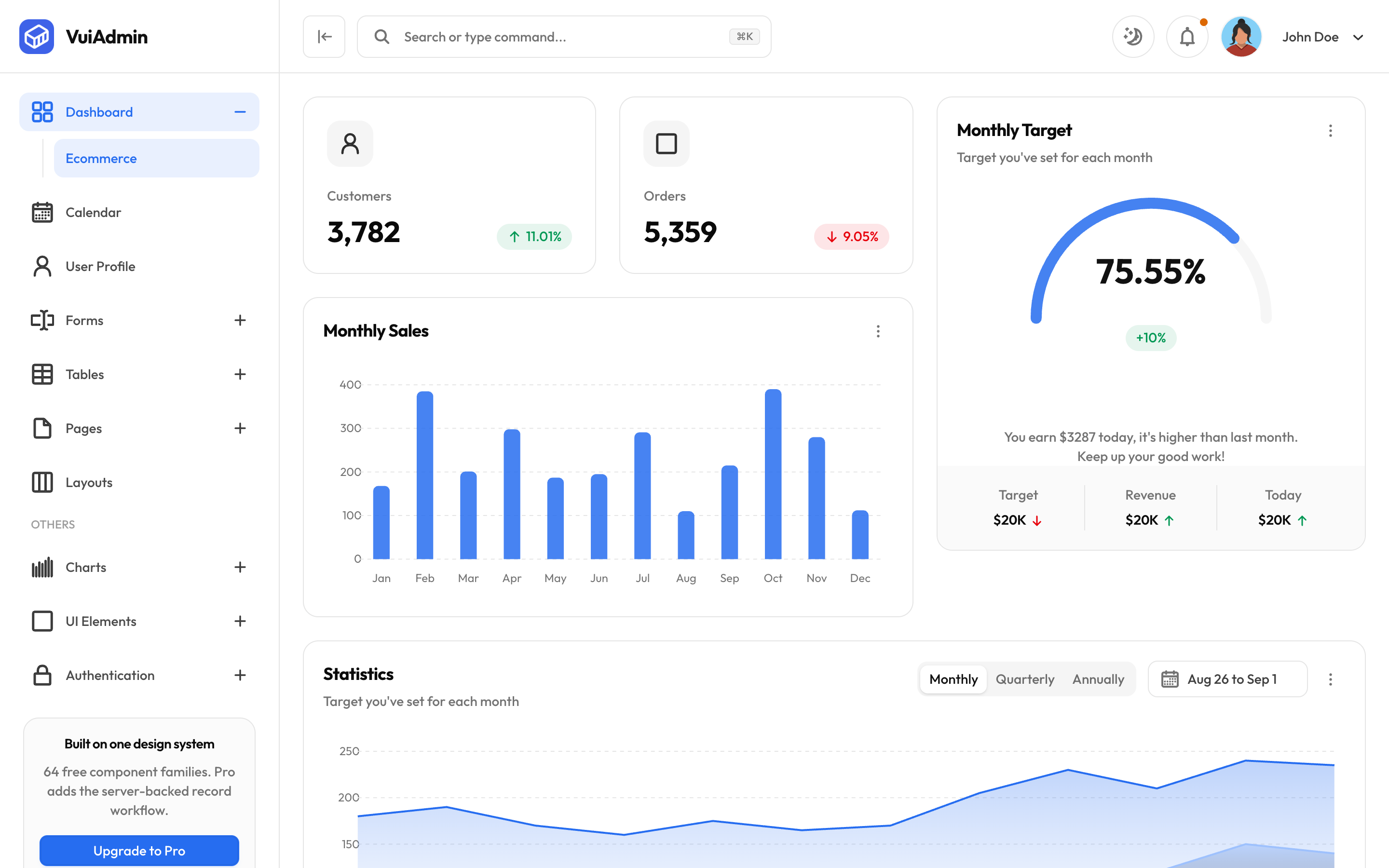
- Dashboard with metrics, a monthly sales bar chart, a monthly target gauge, a statistics area chart with monthly, quarterly and annual views, a customers-by-country world map, and recent orders
- Calendar with add, edit and delete, in month, week and day views
- User profile with profile, address, security and danger-zone cards, each with an edit dialog
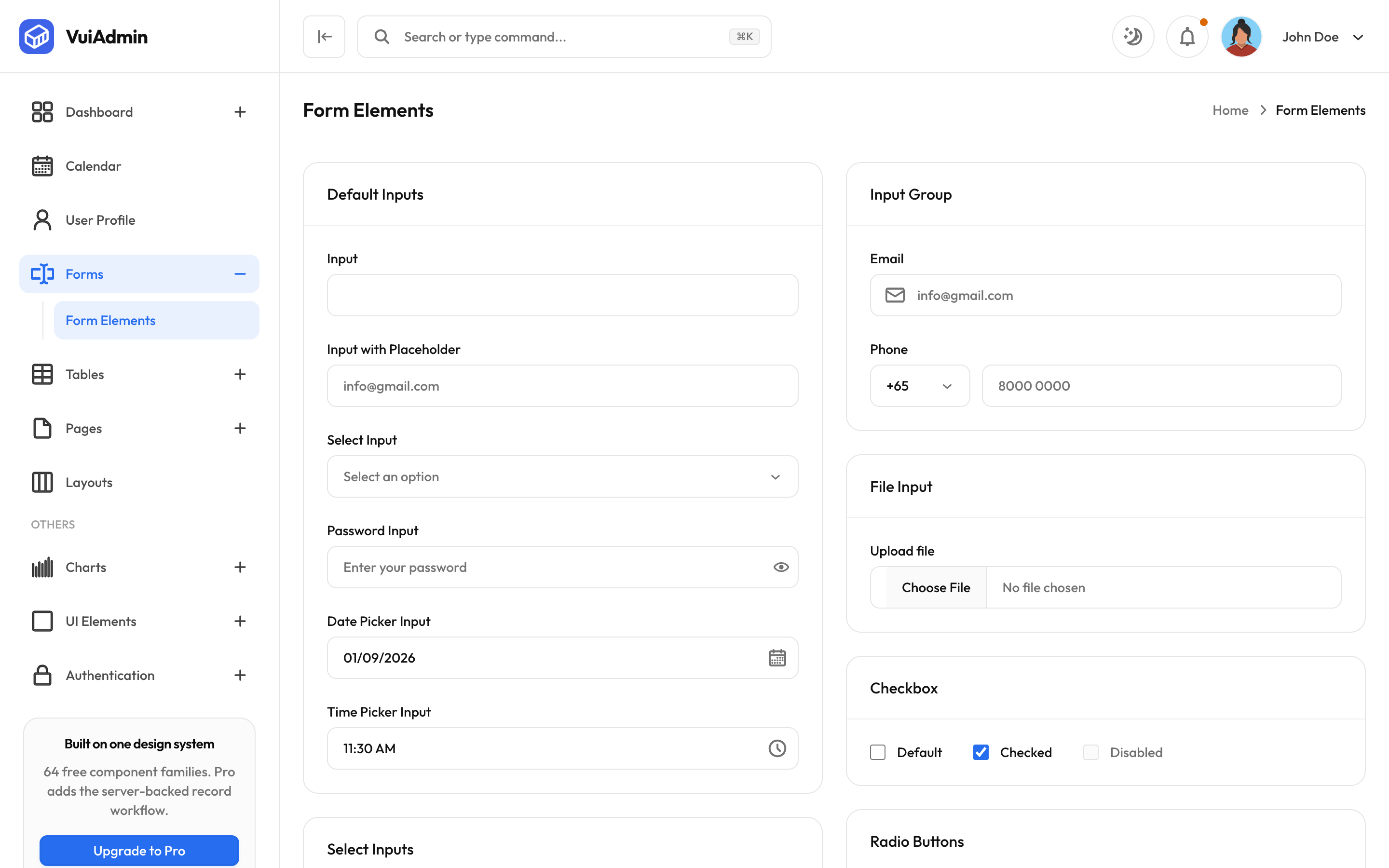
- Forms covering every input type: text, select, multi-select, date, time, radio, checkbox, switch, file upload, and a password field with a reveal toggle
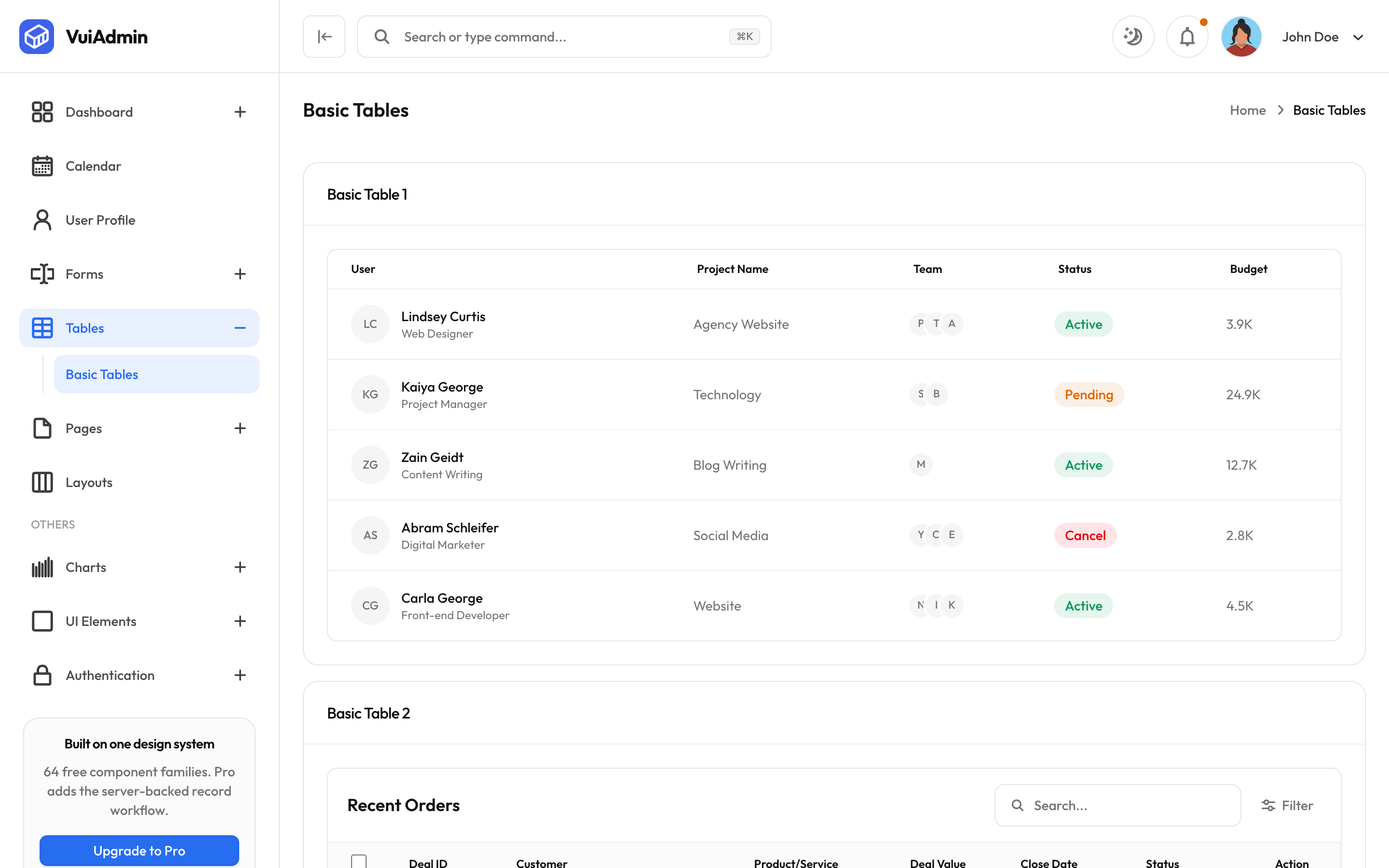
- Tables with search, filter, sorting and row actions
- Charts, line and bar, themed from the same tokens as everything else
- UI elements: alerts, avatars, badges, buttons, images, modals, videos
- Authentication: sign in and sign up on a split-screen layout, with social buttons
- Pages: a blank page to start from, six shell layouts, and a 404
What makes it worth using
One design system underneath all six. Colours, typography, radius, dark mode, the icon treatment
and the six shell layouts come from one token file. Change --brand and every screen follows, in
every framework.
Dark mode that inverts properly rather than washing out. It is a class on <html>, so it needs no
JavaScript to stay applied, only to toggle. The charts, the world map and the calendar all read the
same tokens, so they follow.
Accessibility that was actually done. aria-current on the row you are on, roving tabindex and
arrow keys on tab groups, <dialog> for modals so focus trapping comes from the platform, and no
control that announces a popup with nothing behind it.
Fixtures next to the screen that uses them. No mock server, no seed script, no schema to reverse engineer. Open a screen and you can see exactly where your data goes.
Parity checks in CI. The sidebar, the shared route list and the screen map are held against each other in both directions, so a nav item with no page and a page with no nav item both fail the build rather than shipping.